
Find South Carolina Marriage Records
South Carolina marriage records document unions from July 1911 to the present. The state requires these vital records for legal name changes, benefits claims, and genealogical research. County Probate Courts issue licenses and maintain local records. The Department of Public Health keeps statewide copies from July 1950 onward. You can request certified copies online, by mail, or in person.
South Carolina Marriage Records Quick Facts
Where to Find South Carolina Marriage Records
You have two main sources for South Carolina marriage records. The county Probate Court holds the original marriage licenses and certificates for unions performed in that jurisdiction. These courts began keeping records on July 1, 1911. You can visit the Probate Court in the county where the license was issued. Staff can help you locate and copy records for marriages that took place there.
The South Carolina Department of Public Health maintains copies of marriage certificates from July 1950 onward. State law now requires counties to send copies to Columbia. The DPH Vital Records Office can issue certified copies for legal purposes. Their office sits at 2600 Bull Street in Columbia. You can also order by mail or phone through VitalChek.
Visit the DPH Marriage Certificates page to start your search for South Carolina marriage records online or by phone.
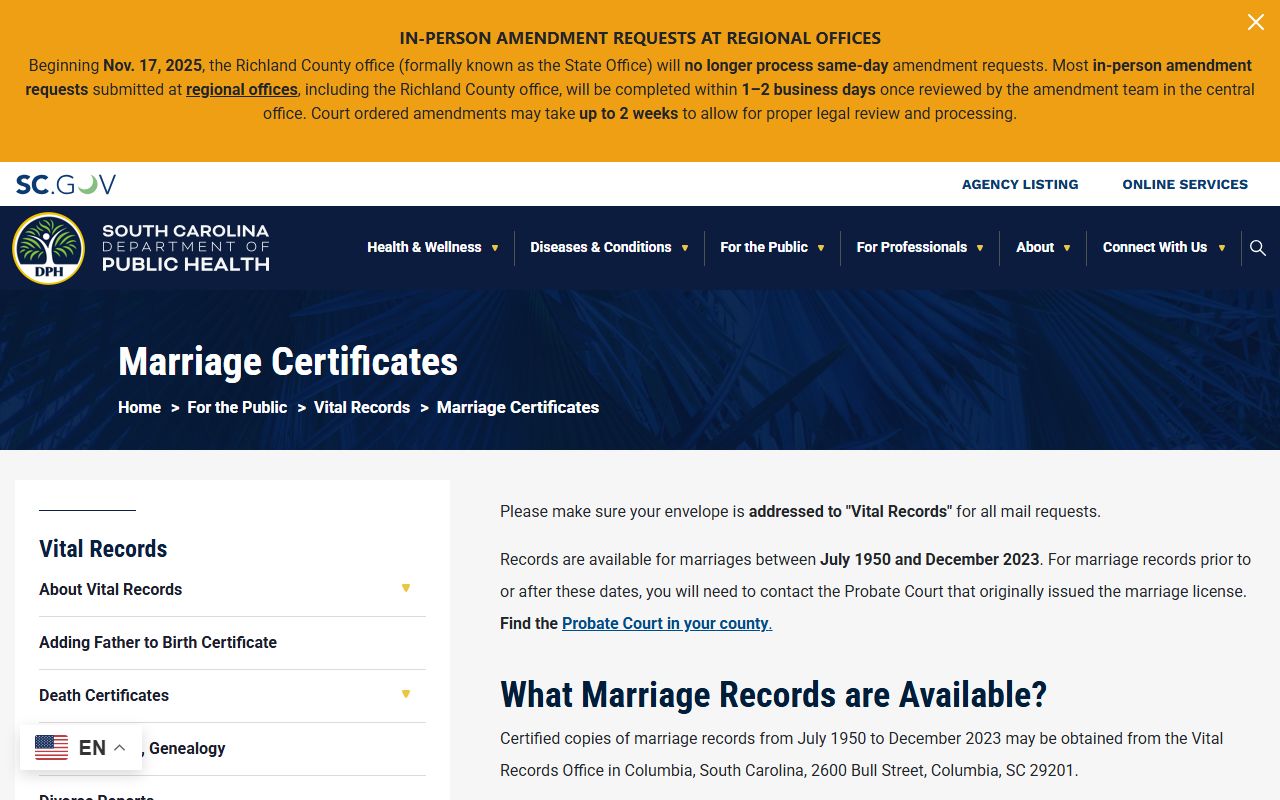
The DPH website shows current fees and requirements for obtaining certified copies of South Carolina marriage certificates. You can view instructions for online, mail, in-person, and drop-off requests.
Historical records from before 1911 are harder to find. The South Carolina Department of Archives and History holds some early marriage settlements. Church records may also contain proof of marriages from the colonial period. Many families used common law marriage before licenses were required.
Learn more about vital records services at the DPH About Vital Records page.
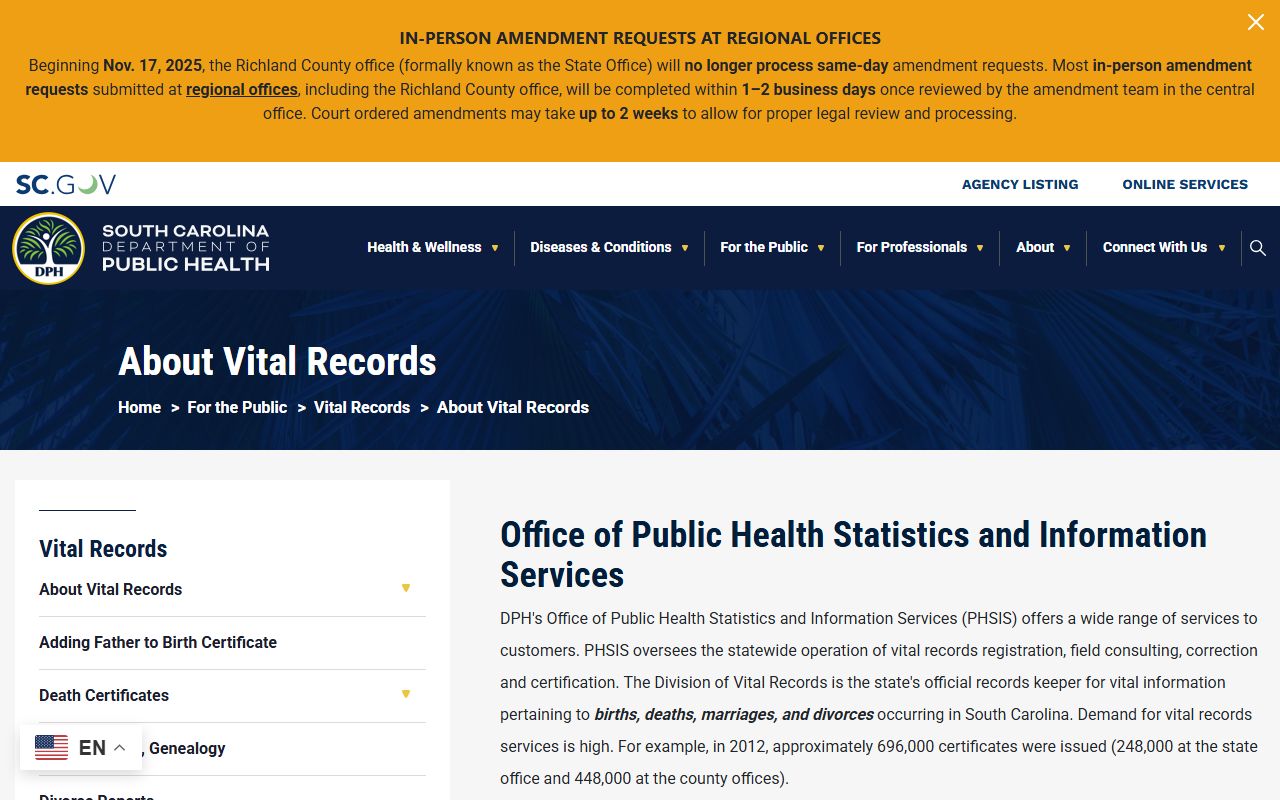
The DPH Office of Public Health Statistics oversees registration and certification of all vital events in South Carolina including births, deaths, marriages, and divorces.
South Carolina Marriage Laws and Requirements
South Carolina laws govern how marriage licenses are issued and recorded. Title 20 Chapter 1 of the South Carolina Code contains the statutes. These rules ensure proper documentation of all marriages in the state. Understanding the laws helps you know what records exist and who can access them.
Under Section 20-1-210, no one may marry in South Carolina without a license. The law requires a written application filed at least 24 hours before issuance. Both parties must sign the form. Section 20-1-250 sets the minimum age at 16 with parental consent. No licenses go to anyone under 16.
Visit the South Carolina Code of Laws Title 20 Chapter 1 to read the full text of marriage statutes.
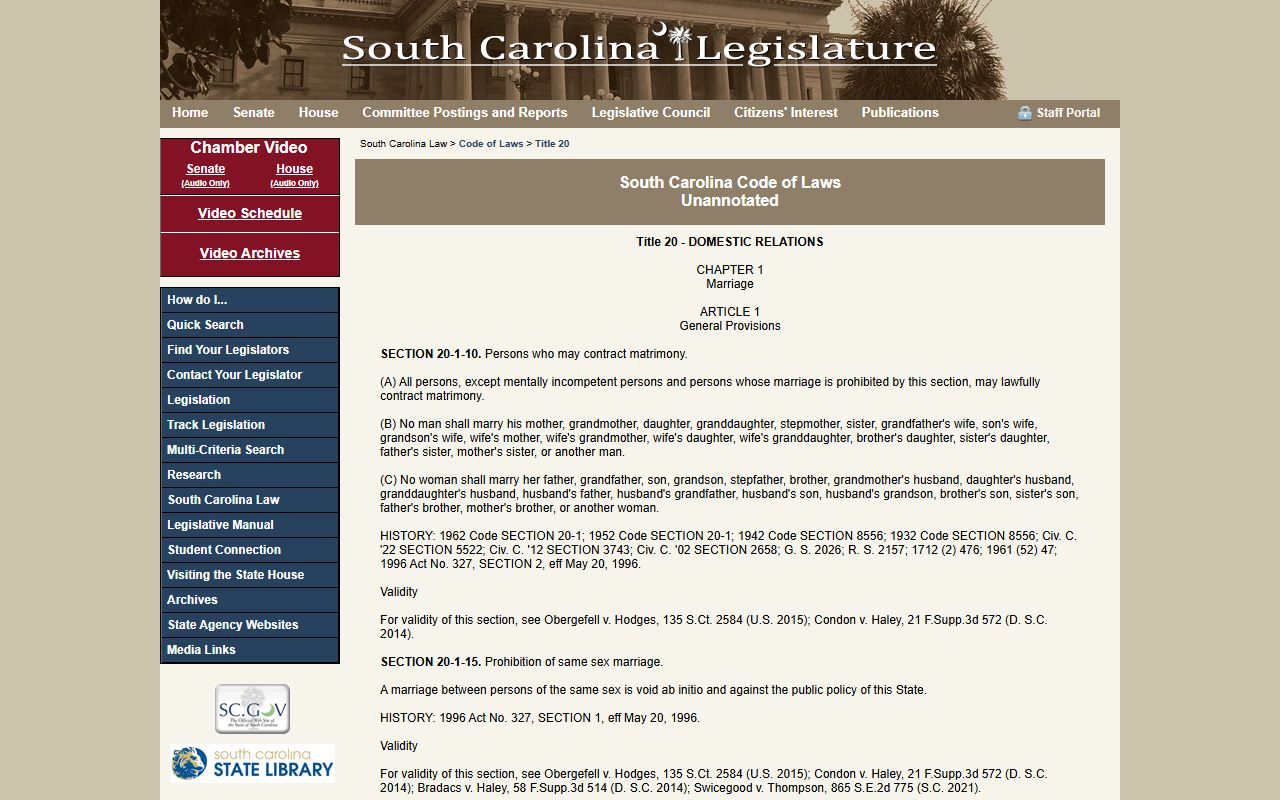
The state legislature has established clear rules for marriage licenses in South Carolina. These statutes protect the integrity of marriage records and define who may access them.
License fees vary by county. Section 20-1-375 adds a $20 fee to each application. This money goes to the Domestic Violence Fund. The total cost depends on whether you are a state resident and which county issues the license. Some counties charge less for residents.
After the ceremony, the officiant returns two copies to the issuing court within 15 days. The court records one copy and sends one to the Division of Vital Statistics. This process creates the official marriage record.
Note: Always check current fees with the specific Probate Court before applying, as local costs may vary across South Carolina counties.
How to Request South Carolina Marriage Records
You have four ways to obtain certified copies of marriage certificates. Each method has different processing times and costs. Pick the option that works best for your needs and timeline.
Online or phone orders go through VitalChek. Call 1-877-284-1008 any time. The web portal is open 24 hours a day. Processing takes about 5 to 7 business days. You pay a $17 search fee plus $12.85 for VitalChek services. Each extra copy costs $3. Shipping fees apply for UPS delivery. Only the couple, their adult children, or a spouse may use this method.
See the VitalChek South Carolina page for online ordering of marriage records.
VitalChek is the authorized third-party service for South Carolina vital records. They provide secure online ordering with expedited processing options.
In-person visits offer same-day service at the DPH office in Columbia. The office opens at 8:30 AM and closes at 5 PM. Tuesday through Thursday mornings are least busy. Bring a completed form, your ID, and payment. The address is 2600 Bull Street, Columbia, SC 29201.
Mail requests take about 4 weeks to process. Send your form to S.C. Department of Public Health, Vital Records Section, P.O. Box 2046, West Columbia, SC 29171. Include a $12 search fee and a copy of your photo ID. Make checks payable to S.C. DPH.
Drop-off service lets you leave forms at the Columbia office. Choose standard processing for $12 or expedited for $17. Pay with exact cash, money order, or cashier check.
Marriage Record Fees in South Carolina
Costs vary based on how you order and where you go. State fees are set by law. County fees differ by location. Know what to expect before you request records.
The CDC lists standard fees for South Carolina vital records. Marriage certificate searches cost $12. This fee is non-refundable even if no record is found. The price includes one certified copy if located. Extra copies ordered at the same time cost $3 each.
Check the CDC South Carolina Vital Records page for official fee schedules and contact information.
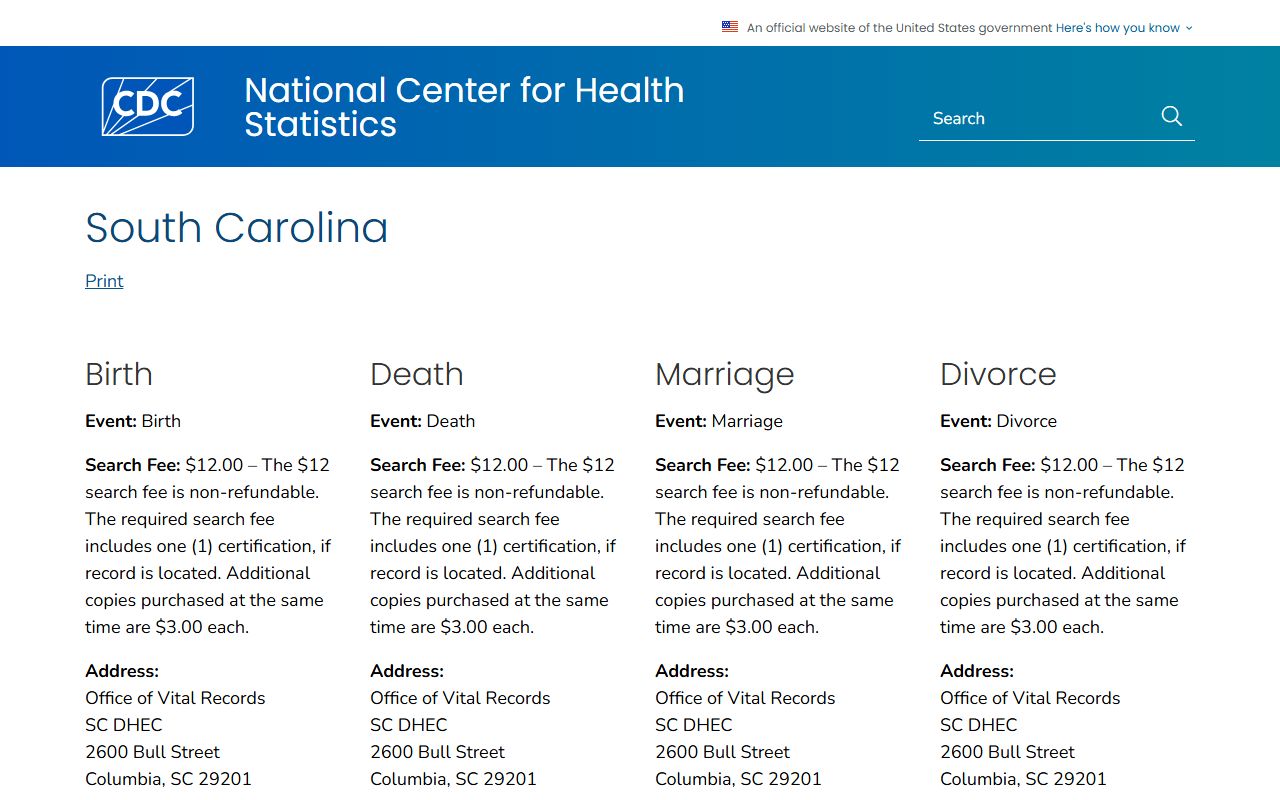
The CDC provides a reliable reference for current South Carolina vital records fees, addresses, and identification requirements.
Probate Courts set their own fees for marriage licenses. Application costs range from $40 to $75 depending on the county. Out-of-state residents pay more. Certified copies of old licenses cost around $5 to $10 at most county offices.
Expedited services add to the cost. VitalChek charges extra for rush processing. The DPH office charges $17 for expedited searches versus $12 for standard. UPS shipping adds more if you need fast delivery.
What South Carolina Marriage Records Contain
Marriage records in South Carolina hold key details about the union. The application asks for full legal names of both parties. It also requests dates of birth, places of birth, and current addresses. Social Security numbers are required for both applicants.
The completed certificate adds more facts. It shows the wedding date and location. The officiant's name and title appear on the form. Both spouses sign the document. The officiant also signs to confirm the ceremony took place.
Genealogists find rich data in these records. Parents' names often appear on older forms. Previous marriage information helps track family history. The records link generations through documented proof of unions.
Certified copies serve many legal needs. You need one to change your name on official documents. Benefits claims require proof of marriage. Passport applications may need a certificate. Genealogy research relies on these vital records.
Certification and Apostille for South Carolina Marriage Records
Some uses require special certification. Foreign governments often need an apostille. This extra step proves the document is real. The Secretary of State handles these requests.
Regular certified copies work for most U.S. purposes. The DPH or Probate Court stamps and signs them. These show the record is a true copy of the original on file.
Visit the Secretary of State Vital Records Certification page to learn about apostille services.
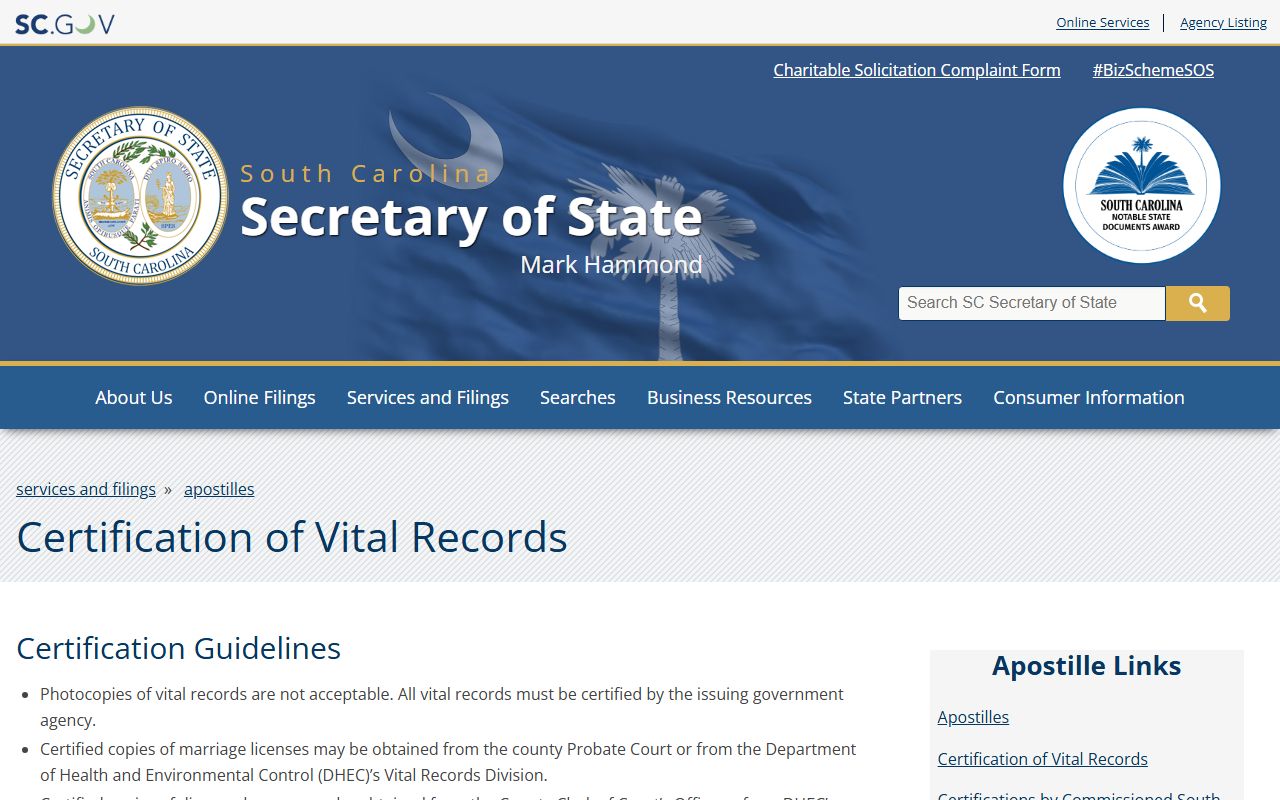
The Secretary of State office provides authentication for South Carolina vital records used internationally, requiring certified copies from official sources.
Photocopies are not valid for legal use. You must get certified copies from DPH or the county. The Secretary of State will not apostille uncertified copies. Start with a proper certified document from the right office.
Historical South Carolina Marriage Records
Researching older unions requires different sources. South Carolina did not require licenses until 1911. Before that date, marriages were informal or recorded by churches.
The South Carolina Department of Archives and History holds pre-1911 records. They have marriage settlements from the 1760s to 1880s. These were legal agreements made before marriage. Women used them to protect property rights. The Archives also holds early county records on microfilm.
Explore the South Carolina Department of Archives and History for historical marriage records and genealogical resources.
The Archives holds millions of documents spanning centuries of South Carolina history including marriage settlements, probate records, and early licenses.
FamilySearch offers free online indexes. Their databases cover South Carolina marriages from 1641 to 1965. You can search by bride or groom name. Many records link to scanned images.
SCGenWeb has county-level resources. Volunteers have transcribed early marriage records. Each county page lists what is available. Some include actual document images.
Browse SCGenWeb Vital Records for free county-level marriage record indexes and transcriptions.
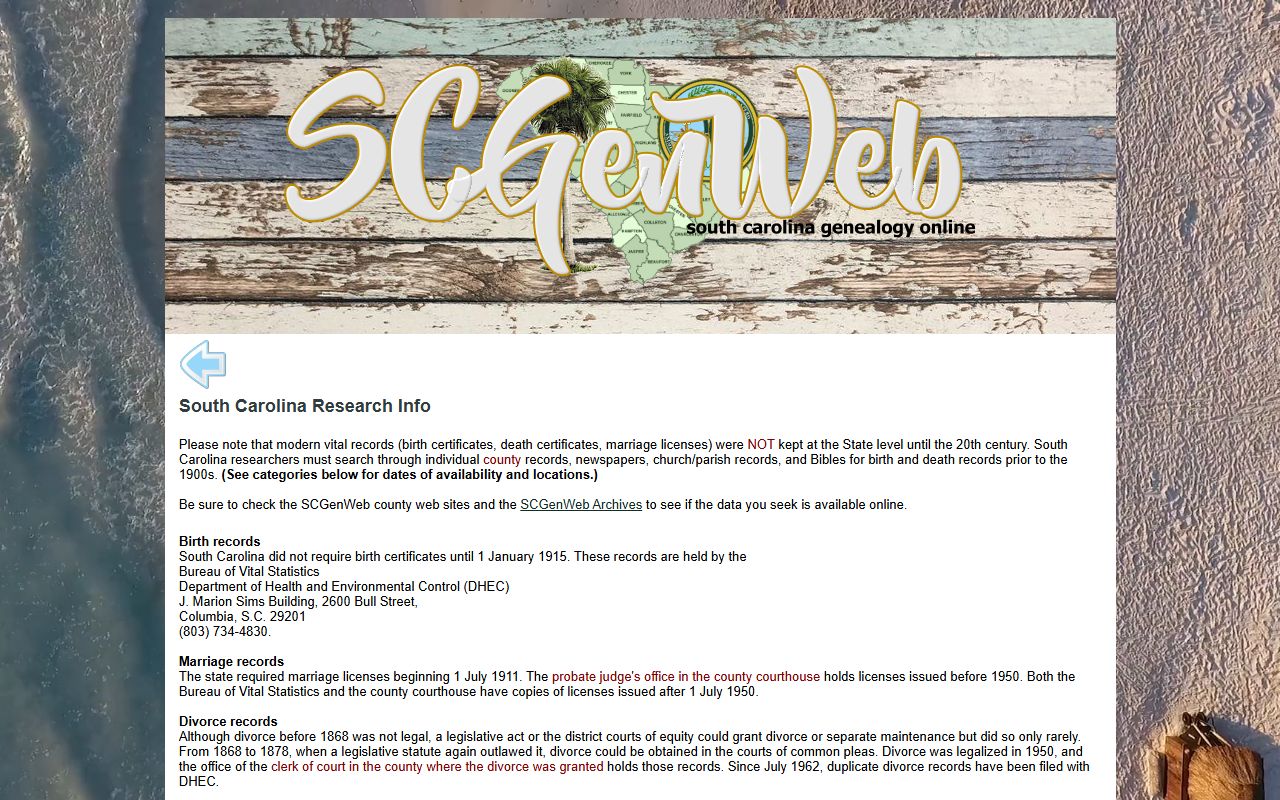
SCGenWeb provides free genealogical resources for South Carolina including marriage record transcriptions contributed by volunteers across the state.
Charleston has records dating to 1877. The South Carolina Room at the public library holds special collections. Georgetown and other coastal counties also have early marriage books.
County Probate Courts and Marriage Records
Each of South Carolina's 46 counties has a Probate Court. These courts have exclusive power to issue marriage licenses. They also keep the records of all licenses they issue. This local control means procedures vary slightly by county.
The South Carolina Judicial Branch oversees all Probate Courts. Each court has a judge elected for four years. Staff handle license applications and certify copies of old records.
Most counties require both parties to appear in person. You need photo ID and Social Security cards. The 24-hour waiting period applies statewide. Some courts take walk-ins while others need appointments.
After the wedding, the court files the certificate. They keep this record forever. You can return years later to get a certified copy. The court can search back to 1911 in most counties.
The South Carolina Judicial Branch website provides a directory of all 46 Probate Courts. Visit their site to find contact information for your local court.
How to Apply for a Marriage License in South Carolina
Getting married in South Carolina starts with a license. The process is simple but has specific steps. Plan ahead to avoid delays on your wedding day.
First, visit the Probate Court in any county. Both partners must be present. Bring a valid photo ID like a driver's license or passport. You also need your Social Security card or proof of your number.
Fill out the application form together. You will list your names, addresses, and birth details. The form asks about previous marriages. You must note how they ended.
Pay the license fee. Costs range from $40 to $75. Some counties give discounts to state residents. Others charge more for out-of-state couples. Bring cash as some courts do not take cards.
Wait 24 hours by law. The license is not valid until a full day passes. This cooling-off period is mandatory across South Carolina. Plan your courthouse visit with this delay in mind.
The license is good for any ceremony in South Carolina. You can marry in any county regardless of where you got the license. An authorized officiant must perform the ceremony. Then they return the signed certificate to the court.
ID Requirements for South Carolina Marriage Records
Access to marriage records requires proper identification. State law limits who can get certified copies. This protects personal information from misuse.
To get a copy of a marriage certificate, you must be the bride, groom, or their child. Legal representatives can also request records. You must prove your relationship with documentation.
Acceptable ID includes a driver's license, state ID, passport, or military card. The ID must be current and show your photo. It must also have your signature.
If you lack primary ID, bring two alternate forms. One must show your current address. Options include a utility bill, bank statement, or birth certificate. Call ahead if you are unsure what to bring.
View the DHEC Vital Records Application form to see full ID requirements.
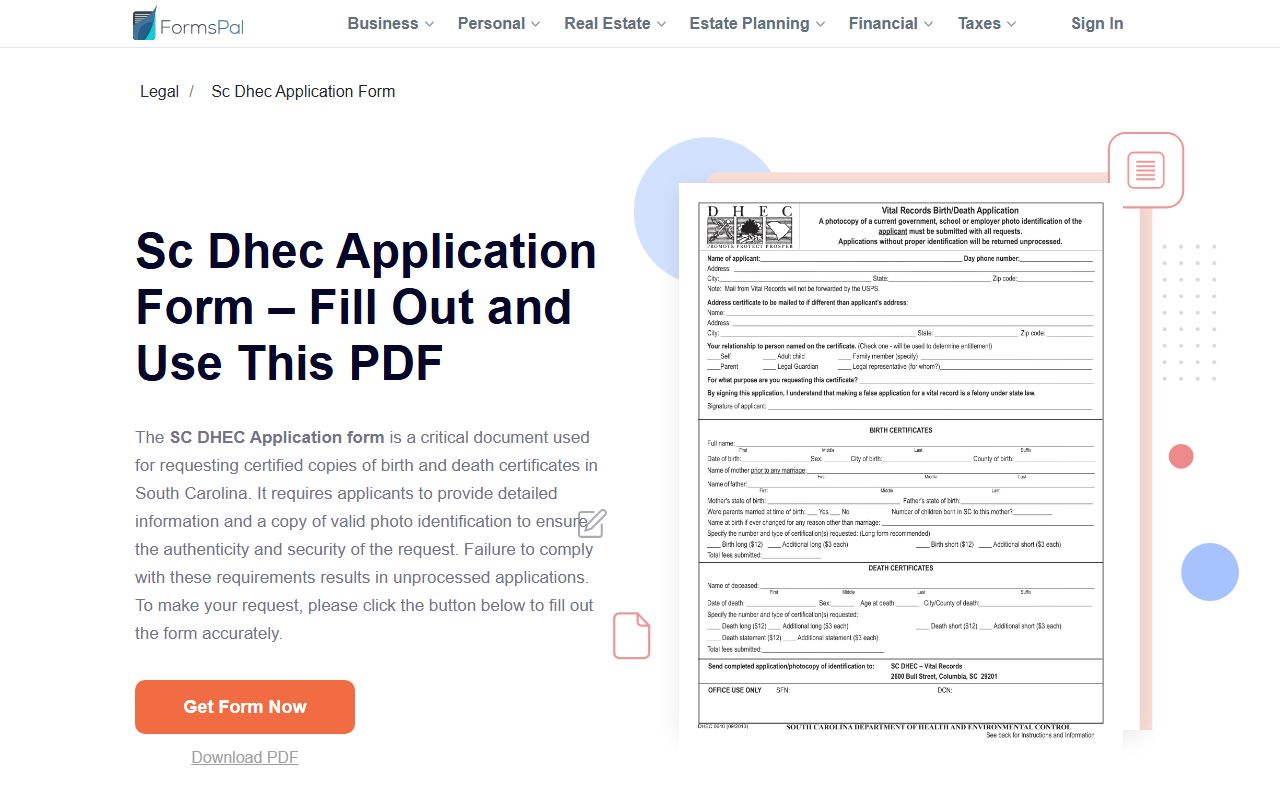
The official application form lists all acceptable identification types and requirements for obtaining South Carolina marriage records.
Library of Congress South Carolina Marriage Resources
The Library of Congress provides guides for South Carolina researchers. Their local history and genealogy page covers vital records. This includes marriage documentation from colonial times to today.
The guide explains where to find records by time period. County Probate Courts hold records from 1911 onward. Pre-1911 marriages appear in church and settlement records. The guide links to online databases and archives.
Explore the Library of Congress South Carolina Vital Records Guide for research help.
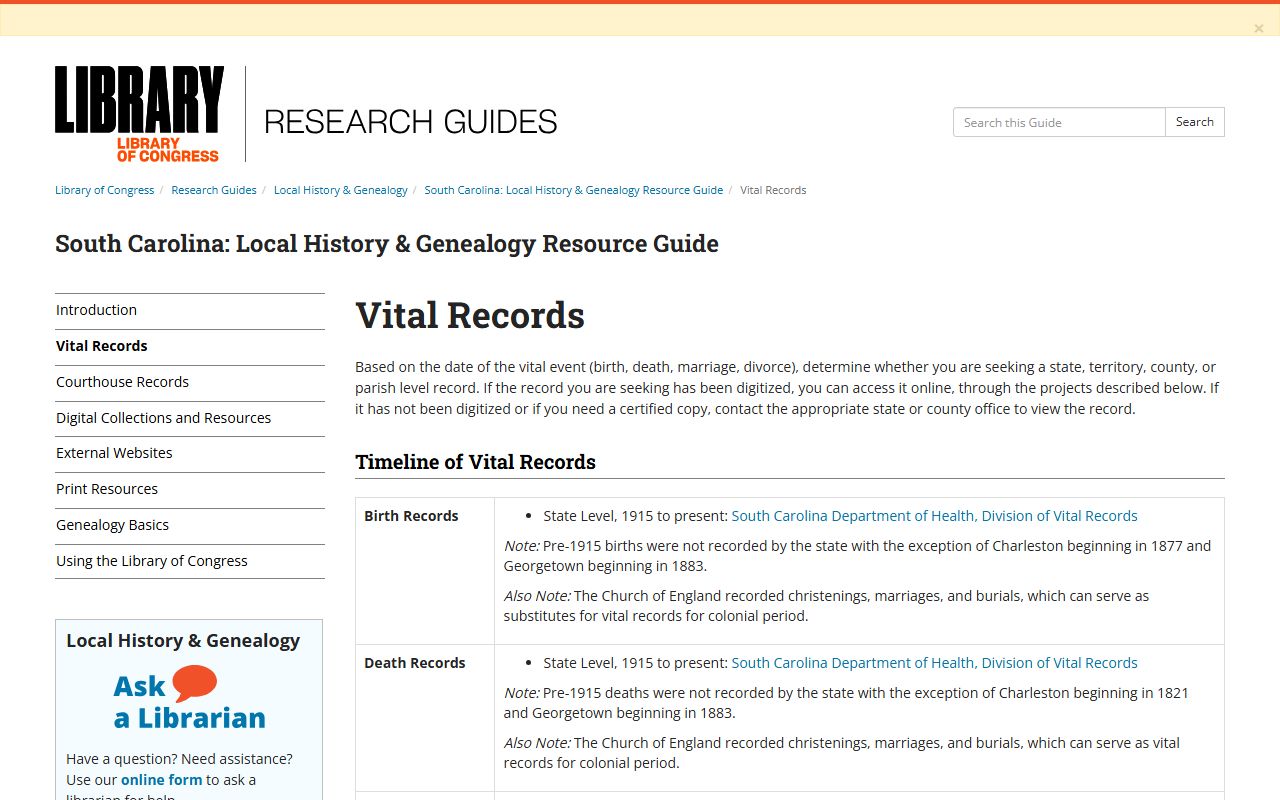
The Library of Congress provides authoritative research guides for South Carolina marriage records spanning from colonial times through modern documentation.
Researchers can learn about substitute records. These include bible entries, newspaper notices, and pension files. The guide also covers manuscript collections with marriage data.
Note: Many South Carolina marriage records have been digitized and are available online through the resources linked in the Library of Congress guide.
Browse South Carolina Marriage Records by County
Each of the 46 counties in South Carolina maintains marriage records through its Probate Court. Select a county below to find local contact information and resources for obtaining marriage records in that area.
Marriage Records in Major South Carolina Cities
Residents of South Carolina cities obtain marriage licenses through their county Probate Court. Select a city below to learn about marriage records and vital records services available in that area.